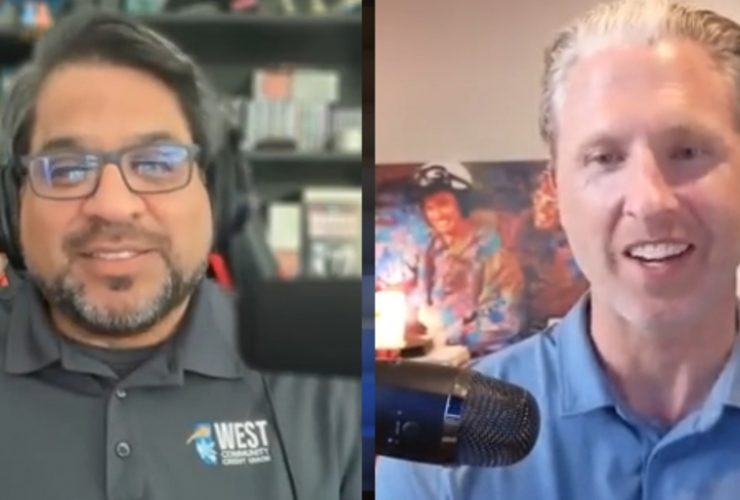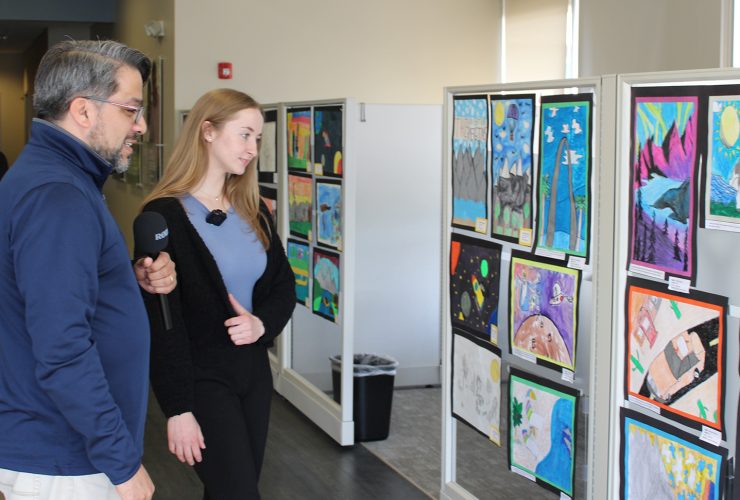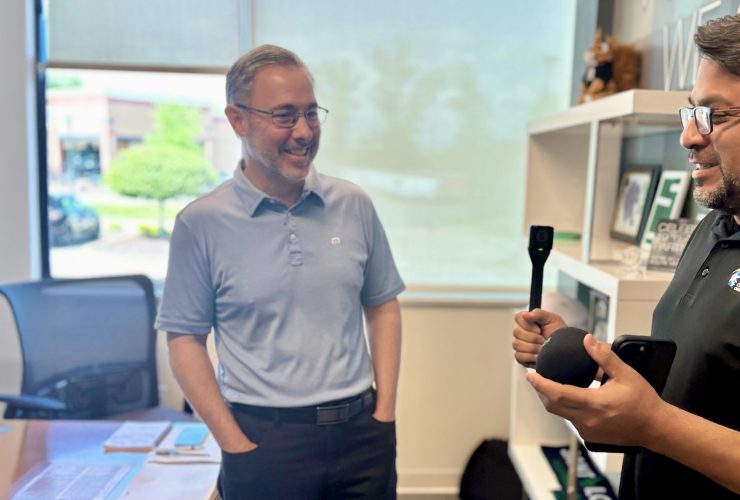

On May 16th, a powerful EF3 tornado tore through North St. Louis, leaving devastation in its wake and exposing deep-rooted challenges in communities already struggling to survive. In this season finale of Banking on You, host Josh Rodriguez takes you to ground zero where lives were upended and resilience was tested. Hear firsthand accounts from community leaders and activists, explore the systemic issues laid bare by the storm, and discover how rebuilding will mean everyone coming together.
Special thanks to the special people who are working hard for the people of North St. Louis and who contributed to this episode: Demaris Ridgell “Brother D”, Sebastian Montes – La Calle Mexican Restaurant, Jarrad Holst – 1904Group, Dr LJ Punch – 314Oasis, Stephanie Reynolds – 314 Oasis, and Ashley Norton – The Kaufmann Fund”
Links
- The Little Bit Foundation
- The Kaufmann Fund
- The Wounded Warriors Project
- The Veterans Community Project
- Grunt Style (donated t-shirts)
- 314 Oasis
- People’s Health Center
- La Calle Mexican Restaurant
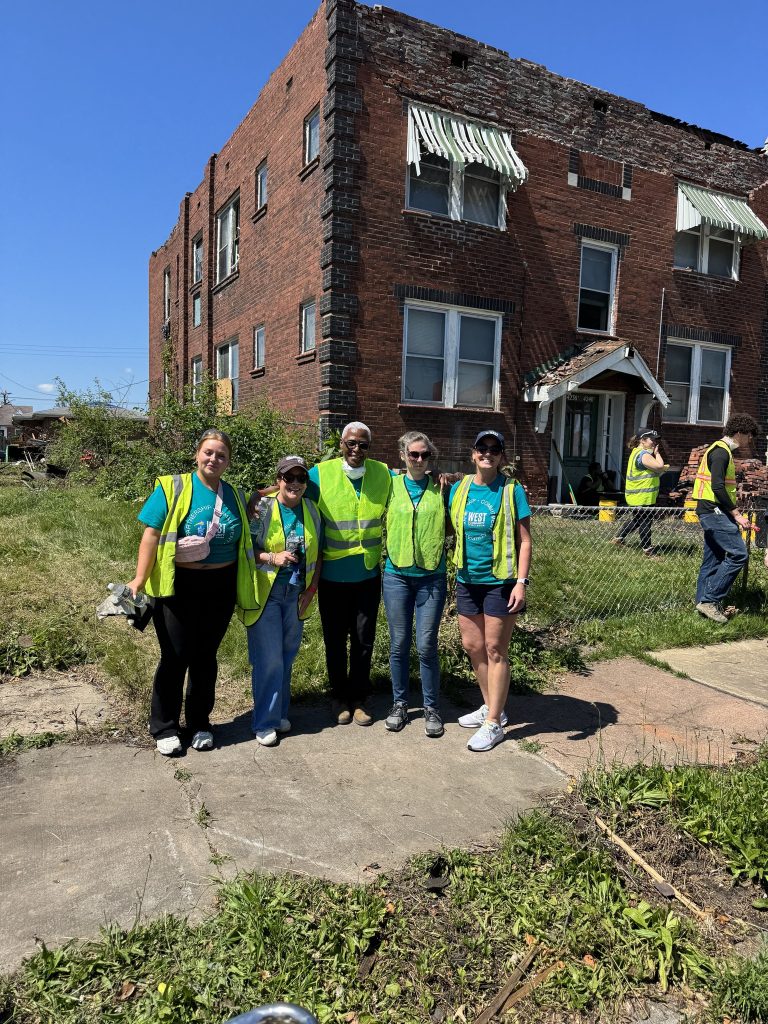
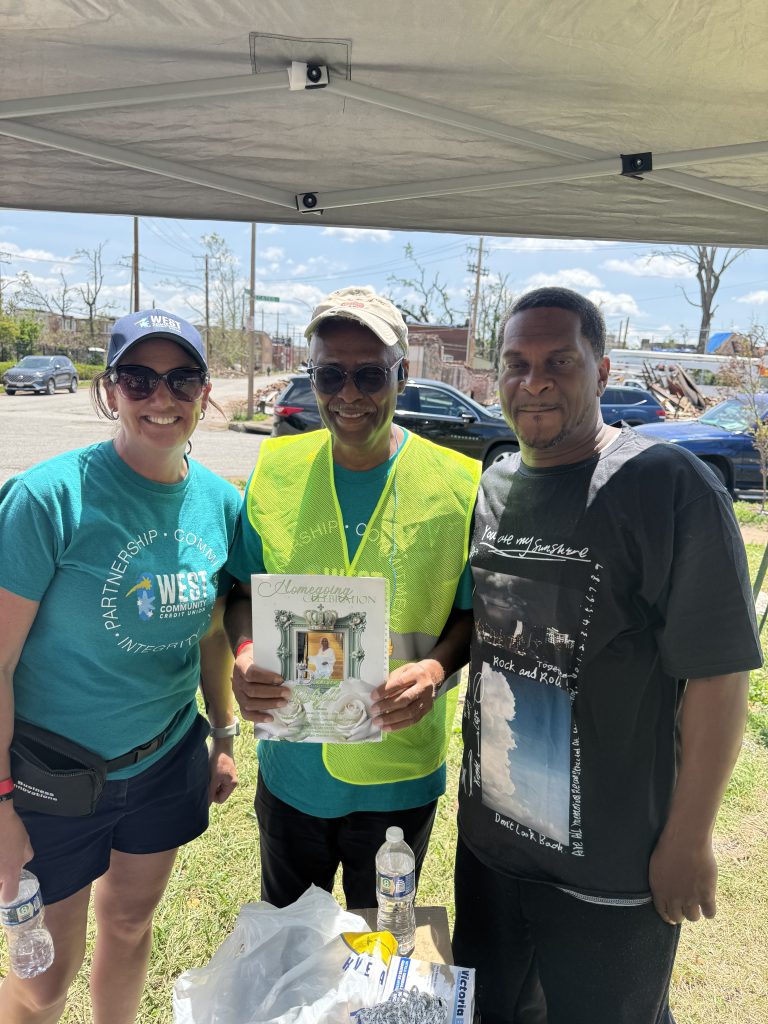
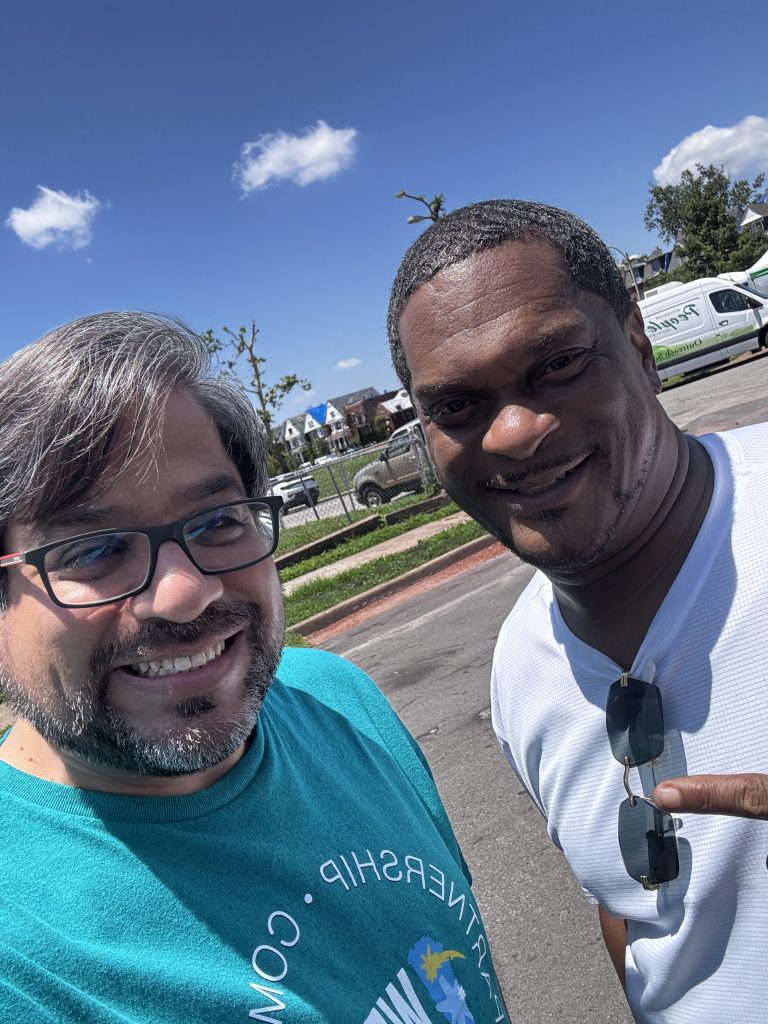
See more pics from our tornado relief efforts on Facebook
How to Listen:
Subscribe on your favorite podcast player so you never miss an episode:



Follow Banking on You Podcast for updates:
Facebook | Instagram | TikTok | Threads | LinkedIn | Substack
Banking on You is powered by West Community and Tigers Community Credit Union.
Transcript
Host Josh Rodriguez
The sky was a flurry of activity early afternoon Friday, May 16th. The National Weather Service reported multiple severe thunderstorms had developed over the St. Louis metropolitan area, and this rogue gang of thunderheads quickly strengthened. Pretty typical for northeastern Missouri in the spring, but soon after, the telltale rotation of one of nature’s most mesmerizing, yet terrifying phenomena began to unfold.
[tornado footage from survivors]
Host Josh Rodriguez
Welcome to the final episode of season one of the Banking on You podcast. This is episode eight, Banking on St. Louis, part two.
It has been exactly six months since the May 16th tornado damaged thousands of homes, businesses, churches, and abandoned buildings. Communities like the Ville, Fountain Park, the Greater Ville, and other neighborhoods which were already struggling just to survive. The EF3 twister reminded us once again of the fragility of our human existence.
Just how difficult that very existence can be for the residents of North St. Louis. It ripped away a tattered bandage to reveal an oozing, unpleasant wound. The tornado knocked the blinders from our complacent eyes, revealing a struggle we all knew existed, but chose to ignore.
One thing is certain, it’s time for a change for the neighborhoods of North St. Louis. And it’s going to take all of us working together to make that change. It’s time to quit making excuses, time to quit pointing fingers. I’m the host of Banking on You, Josh Rodriguez. Thank you so much for joining us for our season finale. Buckle up. This is going to be quite the ride.
Twisters are pretty common around the Midwest, however they rarely touch down in the city of St. Louis. And actually, the city’s last rendezvous with a damaging tornado was in 1959. 66 years ago
Living in the Midwest for any length of time, one grows accustomed to the eerie, intentionally unnerving wail of tornado sirens. Myself being a transplant from sunny central California, I tend to always steal a glance upward, even on clear days, just in case. Unfortunately, on May 16th, because of multiple operational blunders, the sirens in the city of St. Louis never sounded. Leaving the residents mostly unaware of the devastation about to visit their communities.
Around 2:41 p.m. the tornado touched down in the county seat of Clayton, rapidly gaining strength and moved into the city in minutes and intensified to an EF3 with winds up to 152 miles per hour. Without mercy, it ripped a gaping wound across the poorest communities in our region.
Brother D
Like I said, my grandmother lived right here on 4500 Fountain for 60 years. Right at 60 years. Hey sis, how are you? I am here with Josh Rodriguez. We’re actually down on ground zero down the street from Big Mama’s house and doing an interview with me right now. So can I give you a buzz back shortly? Yes, my sister from Arizona.
Host Josh Rodriguez
That’s Damaris, better known across North County and North City as Brother D. And that’s what we’ll call him too. He’s the type that can’t even visit a gas station without running into somebody he knows and loves. Yeah, believe it, I’ve seen it with my own eyes. Brother D is a fighter. And in the trenches, on the ground, stand for what you believe in type of person. For years, he’s been fighting for the less fortunate in St. Louis, the ignored neighborhoods, the mostly neglected families and kids. Those struggling to make it from one day to the next. Those on the not so desirable side of the Delmar divide. Yeah, we’ll talk about that more later. He’s a warrior and his battle was just about to get more intense.
Brother D
All of those major streets, man. I was here. Got a call from my executive director from MCU. Community organizer for them. He was in a meeting with Pastor Pat Pendleton, which he unfortunately passed away. Yes, yeah, and he called me and I could hear the desperation. It was storming. I’m living in North County and he called little we scream it. It’s like, help, help, please help, because 911 just got flooded because people were calling. In a matter of 30 minutes, that storm hit.
He said, please call 911, please. We’re trapped inside of the church. So my heart’s pounding, man. I’m like, okay, so I’m calling 911. They’re like, well, sir, we’re getting hundreds of calls. We’re trying to dispatch somebody now or now. So it took us two and a half hours to get here because literally every street, Union, KingshighWay, all of those side cab, need Raymond.
All of these side streets, mean, telephone poles, electric poles were down. It literally looked like an earthquake had hit. I’m from the county, from North County, so we had it back in 21, where we were out of power for about a week. It was, but this is, man, I’ve never seen anything like this in my life, ever.
Host Josh Rodriguez
So Brother D and I were standing right in front of the Centennial Christian Church in the Fountain Park neighborhood. The 129-year-old church was directly in the path of the mile-wide May 16th tornado. You could call it ground zero. A large pink sticker plastered on the front door designated the building as uninhabitable. You honestly, the front doors weren’t accessible anyway. The church’s beautiful brick bell tower, four, maybe five stories tall, now lay in disarray on the front lawn, just a huge pile of brick and
Brother D
And again. Oh, sure. Absolutely. Absolutely, man. Absolutely. Absolutely. And like I said, he was caught in there. I was thinking of director. How you doing, ma’am? Doing well. He was stuck in there for two hours and they brought him out and his comment was, I just wanted to make sure that Mrs. Jackson was OK. And that was the lady that was laying up under him. He shielded like when that collapsed. He literally a missile.
Host Josh Rodriguez
I assume this was a steeple here. I mean, it’s literally on the front yard, right?
Brother D
That is correct. It is literally, Yep, it took them and big shout out to the first responders, EMT fire department. It was about 15 of them and they were pulling off debris and they got him out of there. He was cut up by the, know, lacerations and blood everywhere. But he’s like, man, I’m alive. And when he found out that sister Pat passed away, he was just like, We were all just standing right here. mean, it’s like people were just in utter shock. Like, man, did this just happen? I mean, literally, in 30, then the sun was back out shining like nothing had ever happened. And people were just going on about their business. Like, what happened?
Host Josh Rodriguez
Patricia Ann Pendleton was one of those incredible individuals, always serving, rarely tanking. We lost a fantastic public servant that day. She was one of five to pass away in the tornado, by the way.
Brother D
She was phenomenal. She ran a food pantry. Everybody in this community. She was that angel on earth, I mean, she fed people, man, clothed them. Just a really great person. If she didn’t speak, that mean she had her earphones in, but she would speak and hug everybody, man. Beautiful. And I just saw her, interestingly enough, two days prior. And I was supposed to come down and help her. It’s Saturday with the pantry and when I saw them bringing her out, I’m like,
Well, they had actually came out with a cup just finished coming out of a meeting, you know, talking about how they can expand and serve more of the unhoused and people in this community. And it’s just like, he said that when they opened the door, I you’re talking about 150 mile per…the tornado never touched down. That was just the wind. And it was snapping these buildings.
Sheesh. Yeah, look at that steeple. That church has been there for 100 some odd years. So many historical. They had a statue of Dr. Martin Luther King. I think they were repairing it like right when you see that inside of that wrought iron fence. That was the statue of Martin Luther King that they put about 20 years ago. And it flipped it just like.
It snapped it like a twig. mean literally and this is all literally from Delmar and Kingshighway all the way down to Marcus. I mean it’s like every street.
Host Josh Rodriguez
Hmm. I asked Brother D where Patricia would have been had she not been taken from us that day.
Brother D
Gosh, she would be right over there at Fountain Park, serving meals, praying for people, cuddling the babies. I mean, just, yeah, man, yeah, just giving people, you know, hope in a seemingly hopeless situation. But again, I’m just so grateful for all of the outpouring and community standing together in such a tragedy.
Host Josh Rodriguez
The damage inflicted on North St. Louis went far beyond the Fountain Park neighborhood. The tornado was on the ground for 26 minutes, ripped a 23-mile-long path across the city, and roared northeast at an average of 55 miles per hour, as mentioned an entire mile wide.
Brother D
If you can see from just from our vantage point, you can see the roofs. I mean, and this stretches miles, miles and miles. Yeah, yeah. I mean, literally they’re going to need new, new, new, new roofs on their, on their homes, windows and siding. I mean, to see how that wind ripped through them homes like that is just amazing. Like this whole front of these guys here on the scaffold. It, it, and these are three story, two, three story homes. That roof is completely gone over there. The one right next to the front part of it had blown off. And like I said, this is just the West End area over in the Ville area. I mean, literally every street. And these are major streets that run for blocks and blocks. And it just you saw Forest Park. Yeah. So that’s how it looks at fairground and how looks at historic O’Fallon Park.
Host Josh Rodriguez
It’s estimated that 10,000 buildings were damaged or destroyed in that 30 minutes on May 16th. Some in the more affluent neighborhoods Clayton, the Central West End Forest Park, the Delmar Loop, but others, as we’ve mentioned, the Ville, the Greater Ville Fountain Park, not so fortunate. Neighborhoods that were already struggling.
I really felt like I needed to take a look myself. Listened for a few moments as I record some audio for the first time as I experienced the damage and the devastation. It was quite moving.
Here in Euclid, which is just out of the central west end. Many of these homes are uninhabitable. Some are just piles of rubble, lots of piles right along the streets, just of people’s, their homes as they just get out. Wow, here’s Euclid School. Tire portions of the roof just totally gone. And crews working all over the place. And, there’s the church. I think that’s the church. Oh wow. Just, wow. Steeple on the front, just totally gone. It’s heartbreaking. Pile of rubble chains on the front door. Wow.
An estimated $1.6 billion in property damage. It looked like a war zone, Brother D said. The fact that many of these homeowners are uninsured or underinsured has further complicated their lives. Many of these homes have been passed down generationally. No existing mortgages and often no homeowners insurance. Most of these households live below the poverty line financially. No safety net, no insurance to fall back on. And now, an uninhabitable home. No hope or so it seems.
Like Brother D said, the sun broke through the clouds and shone a bright light on the brokenness of North St. Louis. It laid bare an ugly truth many of us who enjoy a soft suburban lifestyle choose to ignore. Oh sure, we see the abandoned buildings along the I-70 corridor on the way to a Cardinals game. We pass through crumbling neighborhoods on our way to visit Crown Candy. And then we look the other direction, double checking our car doors to make sure they’re locked, securing our wallets. Careful not to turn down one of those dark, unknown streets. The hard truth is years of divestment, abandonment, and apathy have brought certain areas of our city to its knees.
Jarrad Holst
Well, first off, if no one has been to see the devastation in North St. Louis, I highly, highly recommend that they go do it.
Host Josh Rodriguez
Jared Holst. Remember him? The LinkedIn truth bomber, St. Louis attorney and real estate developer? We talked with him back on episode seven, part one.
Jarrad Holst
men that, you know, they make some kind of effort to, you know, donate to United Way, the Urban League. You know, I feel like as St. Louisans, we have an obligation to help one another. To touch on that point, you know, it’s really heartwarming to see all these different organizations and to see the city kind of unite and try to help out, you know, the North St. Louis neighborhoods.
And what they’ve had to deal with, not only with this tornado, which was absolutely devastating. Within a couple days after the tornado, after we went up that morning with my 1904 group team to drop off construction supplies, I came back there with my eight-year-old and 10-year-old and we handed out pizzas and waters and all kinds of stuff. And just seeing their reaction to the devastation, know, spoke volumes to me, you know, in terms of how bad it is.
And how much work it’s going to take and resources, monetary resources it’s going to take to help turn that community around. And this is already a community that has suffered from almost a century of divestment and segregation and racism. They’ve got a very, very long road ahead of them. But I also have a lot of faith in it turning around.
But I also believe that what’s happened in North St. Louis is an opportunity for its rebirth. And it’s an opportunity for us to end the segregation that has been prevalent in North St. Louis for such a long time. And it’s an opportunity for all of our communities to help kind of reintegrate themselves into the North St. Louis community and work together.
Host Josh Rodriguez
There it is. Jared nailed it. It’s time to stop turning a blind eye to North St. Louis. These aren’t just faceless neighborhoods. Let’s look beyond the crumbling buildings, potholed field streets, and boarded up shops and businesses. These are people. Men, women, children, parents, grandparents, aunts, uncles, cousins. Not regions, not neighborhoods, but people just like you and me.
People that deserve a chance. They’re not just stats on a crime report, not demographics on a marketing analysis, not dots on a map, not numbers and letters or points on a grid. They are people like you. People like me. People in need. Real life, red blooded, air breathing humans. It’s too easy and impersonal to read about stats and demographics in an article online and then click the next link and move on. Or to talk about what needs to be done, what should be done, argue about how it should be done, and then actually nothing gets done.
Sebastian
The tornado, I was actually at home and then I rushed to the restaurant because the restaurant is literally right there, about less than a mile away from it.
Host Josh Rodriguez
Sebastian owns La Calla, a Mexican cuisine restaurant in a neighborhood known as The Grove in St. Louis. La Calla was just south of the tornadoes path.
Sebastian
I freaked out because you know, I don’t remember if it was a weekday. I don’t remember exactly what day it was. My fridge, my walk-in fridge, where I put all the meat, all the vegetables I got to walk in, that’s outside, lost power. I bought a bunch of ice to try to preserve the meat, but it was off for like a couple of days, so I lost all that. There was no actual damage to the building.
I think it was about $5,000 worth of like, meat and vegetables. It was a loss, there was nothing else that other people lost. You know, it was devastating. When I saw it for the first time the following couple of days, I went to the neighborhood of North County. And when I saw it was like, you know, everything was ripped off of like, no trees. They’re like, all the buildings collapsed. And I was like, holy crap, you know? It was sad, you know?
Host Josh Rodriguez
Sebastian is no stranger to difficult times and scarcity. He could fully identify with the victims of the tornado.
Sebastian
So I come from a third world country, you know, I’m from Nicaragua and I grew up in a neighborhood where, you know, my mother, my grandparents, they struggled to like feed us, they have to go work on the camp. So I’m used to like having little to nothing. And then when I saw a video of like what was going on in that county, the devastation that happened. You know, it touched me. It’s like I have to do something. And then the only thing I can do at that point is like feed people.
You know, I can make tacos, I got food. So I came up with the idea of like just going out there by myself to just give out food. There’s a bunch of like people that were trying to do fundraisers and doing all this stuff, but then they talk and talk and talk about it and they don’t do no action. And I’m not that type of person. I’m like, I want to do something now. So I remember going to Restaurant Depot, I bought a bunch of meat. The first time I think I did just chicken and steak.
And I just bought a bunch of meat and I think I was like a hundred pounds that I bought off chicken and steak and then I was like, let me just get some tortillas. This is basic ingredients, you know You need the cilantro you need the onions and then get some limes I went out there and within less than an hour Everything was gone when I went there I like I’m not kidding you I cried because the first block I was like
Everything all the buildings were like collapsed. There were so many people on the street
Host Josh Rodriguez
I love what Sebastian said. There are some people that want to talk about problems, try to raise funds, talk about it and do nothing. He’s not one of those people. He sprang into action doing what he loves to do. Making tacos.
Sebastian
and everything else. then there were two kids that came up, probably my son’s age, around nine, 10 years old. They asked me, can I help you with something? The little kids, and I was like, sure, what do you want? Do you want to eat something? I remember they made them tacos. They were like, this is really good. So we put them in little to-go boxes, and the kids were like, can we help you deliver them? That’s when I realized. Everybody in that community wanted to help each other out, especially these two kids. They grabbed all the to-go boxes and they started handing out to like volunteers to the people in the neighborhood. And that’s what made me want to do more. So I was there the next day and I did it for three days. I was Monday, Tuesday, and then a Friday.
Host Josh Rodriguez
Little did Sebastian know that those two little helpers were just the beginning.
Sebastian
And then I started posting on social media and this is what made me do it more. A lot of people were like, Sebastian, how can we help you? A lot of the community, a lot of my friends, a lot of the customers from La Calle came up and they were like, hey, we want to donate some chicken to you so you can continue doing that. So I did it for about three to four weeks, about two to three days every week to just take it out of my free time. Because I’m closed from Monday through Thursday, so I’m like…
I do something when I’m free. then it was nice to like, people were expecting me. Like I ate with tacos, they were coming up and at lunchtime, I would get there for like two hours. They will go out crazy. And then the credit union came up to me too also and then Jason, like Sebastian, how can we help?
Host Josh Rodriguez
The Jason Sebastian’s referring to is Jason Peach, CEO of West Community and Tigers Community Credit Union.
Sebastian
And they did the same thing. They donated some food. They donated things. About six employees volunteered from the union. it was great to have that community come together to just help out everybody else.
Host Josh Rodriguez
It started out with one guy making tacos and then a couple of neighborhood kids joined along. And then a group of credit union volunteers, which eventually ended up a whole army of workers making and handing out tacos. Don’t tell me the efforts of one person can’t make a big difference.
It feels good to give out back to the community. I have a bunch of customers that come in there and there’s a bunch of my customers were affected, but it’s sometimes it’s like it’s not about taking sometimes you got to give back to the community. You know, there’s always something to do. Like there’s always a way to like give out back. And like you said, I’m like.
How can I get back? I don’t know if I can. There are some people that can’t move bricks. It’s too heavy or something like that. So I took that initiative to like, you know what? Everybody loves tacos. Why don’t we just do that? Let’s feed these people. The best part about that is how the community came together to like help myself out, to help other people. it feels great. It’s great. Always find a way to help other people. You know, we…
If you can help somebody across the street, you know, that helps the community too. A lot of things don’t go unnoticed and I’ve noticed that with a lot of people that help out others. I’m just saying, help out when you can.
Host Josh Rodriguez
If you’re in the St. Louis area anytime soon, head over to the Grove and give La Calle a visit. They’re open Thursday through Sunday. Dinner starts at 5:30. Also, they host events, offer catering, bring in DJs on Saturdays, and occasionally have live music. Check out the website for all the details, lacallestl.com. That’s L-A-C-A-L-L-E-S-T-L.com. Oh and when you visit, tell Sebastian Josh from the credit union said hi.
Brother D
When I say that the community has rallied around those who were affected, it’s been a great outpouring right over here in Fountain Park.
Host Josh Rodriguez
Brother D is courting me around the various relief efforts in Fountain Park. This was a couple of months after the tornado. Little Park was hopping. Food trucks pulling up to the street and handing out food until they run out. Various organizations scattered around under tents offering help and hope.
Well, we’re actually, we’re setting up right now just for relief. We have cleaning supplies, we have electrolyte boosters, diapers, plenty of diapers for children and adults, waters, and we’re also setting up medical appointments if needed. So we have dental, radiology, internal medicine, women’s health, and pediatrics, and we also have dental as well.
Host Josh Rodriguez
People’s Health Center trying to meet the physical and medical needs of tornado victims. FEMA was there as well.
We are here with FEMA. We are trying to help out survivors. It’s the easiest way to say that. Help them get some…Hopefully, assistance to get their lives back on track.
I’m Dr. L.J. I’m Stephanie Reynolds. And we are running the 314 Oasis, which is a collective effort for community care in response to the EF3 tornado that tore through the heart of St. Louis on May 16th.
Host Josh Rodriguez
Brother D introduced me to Dr. LJ Punch and Stephanie Reynolds. These two and their team of volunteers are taking tornado relief to a whole new level.
Dr. Punch
The 314 Aces is based on a few core ideas, which is that it exists in three phases of care, the first eight weeks, the first year, and the year after. So we’re still in the acute phase of crisis response. It has one purpose, which is presence. Because when someone has lost their home and their community and way of life has been disrupted, one of the key ingredients you can bring to them to help them restore is presence, your own presence. So we’ve been here with daily presence every day since the tornado. And then it has four tenants: rest, power, care, and connection. And that takes different forms, different days, but it’s sitting in a relaxing chair, getting a good meal, having a cool drink, talking to people about your needs and your circumstances, and getting connected to other services, whether it’s healthcare, social care, recovery, relief, financial assistance. And most of all, giving the communication back to people that they’re not. And yes, you’re right. After the initial flurry of events and activities and volunteering, there are very few front lines that continue to bring presence and care to people because there’s not a really strong infrastructure in place in the region for a disaster at a scale like this. So we’re doing everything we can in solidarity with the Fountain Park and Lewis Place community, neighborhood. the larger impact of St. Louis region, numerous nonprofits, faith communities and leaders who are contributing to the effort in this region, which is region or zone A of the tornadoes path. And then also Centennial Church, which is behind us, which was the safety net for this community, especially for people who are unsheltered and unhoused.
Host Josh Rodriguez
Dr. Punch understands the need for people to feel cared for. Relief efforts often center around meeting basic needs. Food, clothing, toiletries, and that’s great and absolutely necessary. But Dr. Punch draws from years of experience serving in traumatic medical emergencies to meet the tornado victims with care they have probably never encountered before.
Dr. Punch
I’m a trauma surgeon by training and I’ve seen what people do in their bodies, hearts and minds and souls when they’re impacted by trauma. And it’s very hard for people to trust when they’ve been deeply traumatized. So you have to signal to people that they’re in a safe space. And the best way to signal to people that you’re in a safe space is appealing to their senses, right? So comfortable places to sit so your body feels good, good food to eat, cold drinks, good smells, beautiful visuals, art. We’ve even had the Maid Makers District vote, Contemporary Art Museum, and Kababi Bayok as numerous groups of artists have come out to create out here. So it’s just a fundamental way of saying, we’re not just here to pass this stuff out, although that’s very important. We want to invite you into a container of rest, a container of resource that really is in some ways replacing hope.
People come every day, we know their names, they know us, and there’s this trust being built between us and it’s a deep relationship. And I think that is healing. We heal in community, not in isolation. And that’s what we’re creating here. We’ve been doing acupuncture out here. People are getting care that they never even had experienced before this one. Moments like this, although they are devastating, lives were lost. We have to acknowledge that.
They also open new possibilities for things to be better even than they were before. And that’s another thing I think that keeps me going. We’ve had people say because of the care they’ve gotten at the Oasis that they feel better in their bodies than they even did much before the tornado.
Host Josh Rodriguez
This work dives much deeper than just disaster relief. Dr. Punch is looking to make a difference long
Dr. Punch
I have been hoping for a place in space to create low barrier access to holistic care for a long time. I didn’t think a tornado was going to literally rip the door open, but it did. And I do think it needs to continue. And I think it is both an emergent strategy anywhere climate trauma happens and you need to do pop-up holistic care for people, providing resource, also tending to their trauma. But I also think it can be an enduring presence. The truth being that this is going to create a scar that is visible for an entire generation and long for it. So it is important to continue.
Host Josh Rodriguez
It’s exhausting work, but 314 Oasis is resolved to complete the mission and make lasting permanent change.
Dr. Punch
Well, I don’t want to be dishonest. I am exhausted. have been at this space every single day since May 16th. Plus done my best to continue my day job as a surgeon and clinician and nonprofit leader. But I think that the bottom line is what inspires me is that this is bringing to life a principle about giving that I have. And it’s what you keep is all you have, but what you give you multiply. And what I’ve seen is just by my willingness to give my time and presence here every day, so many more people have been willing to do the same. And that single effort has been multiplied a hundred thousand times over just from being here. And I think that’s inspiring me to keep going. But also again, I’m a trauma provider. I understand what wounds do to people. And you don’t leave your patients bedside when they’re still in ICU. And so I’m not leaving St. Louis until it gets a little closer to home.
Host Josh Rodriguez
I don’t think anyone could sum it up better. Thank you, Dr. Punch, for your innovative and tireless effort.
Brother D
So they’ve been out giving out food, toiletries, cleaning supplies, clothing. I mean, just, you know, counseling. So there’s been a plethora of services, you know, and they’ve been out here every day. They’ve been out here, you know, all the women over here. Shamim, Clark Hubbard, she has been absolutely phenomenal. Laura Keys, all the women, they have been boots on the ground.
Host Josh Rodriguez
Brother D’s call for boots on the ground has been taken seriously by many. Some of the West Community Credit Union team had already had a boots on the ground moment, handing out tacos with Sebastian and La Calle. But it was time to lace up again, back to ground zero, but not by ourselves. There’s strength in numbers, so we linked up with some of our amazing community partners.
So this is kind of like guerilla handing out. It’s like not… coordinated effort but it’s kind of like sneak attack down the neighborhood.
Alright, that’s exciting. You don’t know what’s going to happen.
Host Josh Rodriguez
Lori Hudson, our community engagement manager, connected us with the Kauffman Fund for another Boots on the Ground effort.
It was the end of summer, but unfortunately nobody had informed the sun. The blasting heat and off-the-charts humidity reminded us St. Louis summers can be brutal. Nonetheless, we were here on a mission. The volunteers were crammed into this beautiful tiny home built by the Veterans Community Project, preparing food, snacks, home goods, and school supplies.
That little AC unit did its best to keep us cool, but still the room was a bit warmer than we preferred. Even so, it was more comfortable than the stifling heat that was displaced by the tornado we’re experiencing. Because even after three months, many still camped out in tents and makeshift shelters across North St. Louis.
Ashley Norton
My name is Ashley Norton. I am a case manager with the Kauffman Fund. We are out here today with our event Vets Give Back. So our whole goal with that is to come on site here at VCP. We get a bunch of the veterans within the community together, a bunch of different veteran organizations. Everyone from us at the Kauffman Fund, Veterans Community Project, Wounded Warrior Project has been a huge part of this as well. The Vet Center has had people out. Sisters in Service has sent folks out. There’s been tons of just veterans wanting to come together and be able to serve their community. So what we do is we come on site here at VCP. We prep hot meals. Today we’ll be making some pulled chicken sandwiches. Last night, Rebecca and I cooked about 30 pounds of chicken, pulled it this morning, and then now we’re gonna come on site, assemble it, and we’ll make some snack bags. And then we’ll also get together some school supplies. We’ve got some backpacks we’re putting together today with school supplies for kids, because when we’ve gone out before.
What we’ve noticed is we see a lot of families will end up pulling up to a house and kids just kind of pour out of the house, right? And so one of the things we want to do for August with school starting is to make sure that they’ve got the supplies they need to be prepped. So we’ve got some backpacks. We’ll be given out along, like I said, with the hot food, the supplies. We take toilet paper, paper towels, a lot of just, you your basic necessities. We also have Grunt Style has been a huge part of this as well. They’ve donated t-shirts. So we also take, you know, some clothing. Last time, last month when we were out, there was a woman who was out washing her car and when we stopped to talk to her the only thing, clothing, why she had was a shirt on her back. So yeah, we were able to give her some clothes. And the other thing too, we’re trying to really get the word out about to people is that the work that needs to be done for this community is not, it’s not over. It’s not going to be over for plenty of time to come. There’s still folks without power because you the wall that held their electric panel is no longer there.
In my opinion, from being out there and being in an immeasurable amount of damage. Folks are still without roofs, there’s still tarps over their roofs, there’s still bricks laying everywhere, you know, they’ve got it. It truly does look like a war zone. I’ve gone out there with, you know, as veterans we go out there and a lot of times what they keep saying is it feels like they’re back in Iraq. It’s really difficult initially, but then also you see this really beautiful element of veterans coming together to serve their community.
So the first day we went out, one of the vets said, we call on our community to come help us as veterans, to support us. And now it’s our turn as vets to support our community. Yeah, I get goosebumps every time. Yeah, every time I like rethink that, I’m like, man. So again, as veterans, what are they good at? Being boots on the ground. So that’s what we’ve done. Like I said, we go out, we caravan out and take the supplies. We usually end up with about four or five cars.
Chris Miller with Wounded Warrior Project actually started bringing his trailer. So he’ll be here later on today to bring his trailer and we’ll load everything on there and take it out to the street.
Host Josh Rodriguez
Finally, trucks and trailers loaded down with food, toilet paper, school supplies, pet food, and sweaty volunteers, we headed out.
We headed down North St. Louis streets. The tornadoes wake still very visibly noticeable even after three months. Tarps now starting to peel away from unrepaired roofs. Bricks still strewn across yards. Debris still littering the properties. These communities still needed our help. The need was so great.
Thank you, we appreciate you. Thank you for coming back.
How does this make you feel?
Always feels good giving back to community. Can never go wrong helping out, especially people that are in need and going through a hard time. always a pleasure. It is. Even months after the tornado, there’s still a lot of work needs to be done. A lot of people are still hurting. So glad that all these organizations saw here. Coming back and helping out continually, not leaving right after it initially happened. That’s sometimes the hard part is sticking with it for the long term.
Brother D
It speaks to a dynamic that’s in place for this area. There needs to be a major investment in a lot of these areas and communities. I’m hoping that this shines a light on a disinvestment in the city. You know what I mean? Not even three blocks down is a Central West End area and it’s night and day.
my gosh, yeah, yeah, yeah, yeah, yeah. So we had a 5K run. It was called Race for Reconciliation. And, you know, they talked about the Great Delmar Divide. Like, literally, you know, there’s million dollar homes and millionaires and not even three blocks down, utter poverty, drug addiction, hopelessness, joblessness.
Host Josh Rodriguez
The Great Delmar Divide, a socio-economic and racial dividing line that splits right through the city of St. Louis, the proverbial other side of the tracks most cities are known for. To the south of Delmar Boulevard, we find stately multimillion dollar homes, quaint shops, safe streets, great schools. About 73% of the residents are white. To the north, poverty, drugs, a crumbling infrastructure, abandoned buildings, empty lots where homes once existed. The most dangerous neighborhoods in St. Louis. About 98% African-American.
The existence of the Delmar Divide is no secret to the residents of St. Louis, nor to those in the academic world. Many have researched it, pundits have debated it, a multitude of articles can be found online, documentaries are scattered all across YouTube. Many nonprofits have devoted their missions and funding to span the divide, but it doesn’t appear much progress has actually been made.
The majority of the tornado’s damage was north of Delmar Boulevard. there was some damage to the south, but it appears it was promptly tended to and repairs underway quickly. North of Del Mar.
Jarrad Holst
I came back there with my eight-year-old and ten-year-old and we handed out pizzas and waters and all kinds of stuff and
Host Josh Rodriguez
That’s Jared Hulst again. Jared and his 1904 group have been involved in the disaster relief efforts.
Jarrad Holst
You know, in terms of how bad it is and how much work it’s going to take and resources, know, monetary resources it’s going to take to help turn that community around. And this is already a community that has suffered from, you know, almost a century of divestment and segregation and racism that, you know, they’ve got a very, very long road ahead of them. But I also have a lot of faith in it turning around. But I also believe that what’s happened in North St. Louis is an opportunity for its rebirth. And it’s an opportunity for us to end the segregation that has been prevalent in North St. Louis for such a long time. And it’s an opportunity for all of our communities to help kind of reintegrate themselves into the North St. Louis community and work together.
And I’m a firm believer that, you know, I know some folks are concerned about that naughty, you know, G word, gentrification and what effects it could have on that neighborhood.
Host Josh Rodriguez
Gentrification is certainly a concern. The character of many poor urban areas has been drastically changed by the wealthy moving in, improving housing, and attracting new businesses. This often displaces current long-time residents in the process. However you view gentrification, hear Jarrad out.
Jarrad Holst
I actually look at it a different way. I look at it as if we can, those neighborhoods need more investment. And with that investment, you’re going to see more safety. You’re going to see better schools. You’re going to see better neighborhoods, better homes, better businesses. And that’s a, that’s a rising tide that lifts all boats. And I want all of us to be a part of that. I don’t want just one group of us to be a part of it. And so I think that, you know, North City’s better days are ahead of it. So long as we continue fighting for it and we continue to try to get the maximum amount of resources that are needed to help rebuild, you know, North St. Louis.
Host Josh Rodriguez
Dr. Punch mentioned how the financial divestment of the last 50 years has actually made the relief efforts more difficult.
Dr. Punch
I don’t want to downplay their level of need and demand that the region and the individual residents of this neighborhood have a voice. They are hurting. They deserve much more. This is just me bridging a gap with what I know, with what we know. It’s not the end all be all. And it shouldn’t have to be this way. So just because we’re doing a good thing doesn’t excuse that people still don’t need a ton more support.
This is a wound that happened in the middle of 50 years of structural, planned, systemic divestment in this neighborhood and everywhere north of Delmar, right? So you can’t, I’m not, this is not like to turn an eye away from that. I’m just choosing and we’re choosing as best we can to make a generative solution in the midst of that reality, but it doesn’t excuse that reality. So there needs to be accountability from the city, state, and federal government to fix not just the scar, that are the wound that the tornado created, but to recognize the structural divestment that made the wound cut deeper than it had to.
Host Josh Rodriguez
It might just be that Tornado can be a huge turnaround. Yes. Yeah.
Dr. Punch
It sure can. It’s going to do one or the other. Because if you look at these kinds of disasters in other similar areas, whether it’s Haiti, Puerto Rico, or New Orleans, moments like this have actually hastened horrible increases in suicide, overdose, homicide. And we don’t want that to happen here, a neighborhood that was already dealing with that in disproportionate numbers.
Host Josh Rodriguez
So here we are at the six month anniversary. What now? The people of North St. Louis are still struggling. The frigid St. Louis winter is here upon us. The holidays are about to steal away everyone’s attention. Yet the future for many still remains uncertain, unknown, and unsafe. We have a choice to make. What can we do to make a difference? What can we do to improve the situation for the residents of North St. Louis?
Well, we have some options. We can be like Sebastian and take action when others just talk. We can organize efforts like Ashley and pool as many resources together as possible. We can use our experience and expertise like Dr. Punch and reach out to people where their greatest needs exist, right where they are. We can be like Brother D and be wherever we are needed, whenever we are needed, and however we are needed.
We can also strongly encourage and pressure our civic and government leaders to do the right thing. Or we can choose to simply do nothing. To cover our eyes, to keep our head in the sand. To turn away from those that need us most.
You know, the great news is there are many organizations still in the fight. We’re listing a bunch of them down in the show notes where you can donate your time, money, energy, and whatever you are willing and able to give. The time for complacency and apathy is long over. The work is far from complete. The people of North St. Louis are banking on you. And together is the only way we can make this change long term.
So that’s a wrap for season one of Banking on You. and a few notes about the future. Banking on You will be coming back in 2026, even bigger and better. This has been Josh Rodriguez, your host. Remember here at West Community and Tigers Community Credit Union, we’re always banking on you. Talk soon.
Thank you so much for listening to the Banking On You podcast. Please follow us on all the socials at Banking On You pod. For show notes and additional info, visit our website, bankingonyoupodcast.com. And let’s not forget about our incredible team. None of this would be possible without you. JD Sutter is our producer and Gandolf of sound design. Graciously enduring all of my speaking errors was our studio engineer, Dave Powell. You’re a patient man, Dave.
Huge thanks to our marketing and branding team led by Kimberly Berzack. Ashley and Brian, you guys are awesome. The Banking on You podcast theme was composed by none other than Russ Whitelock. Thanks, Russ. Our executive producers are Jason Peach and Karen Greubel. The Banking on You podcast is powered by West Community and Tigers Community Credit Union. And I’m your host, Josh Rodriguez. Until next time, remember, we’re banking on you.